
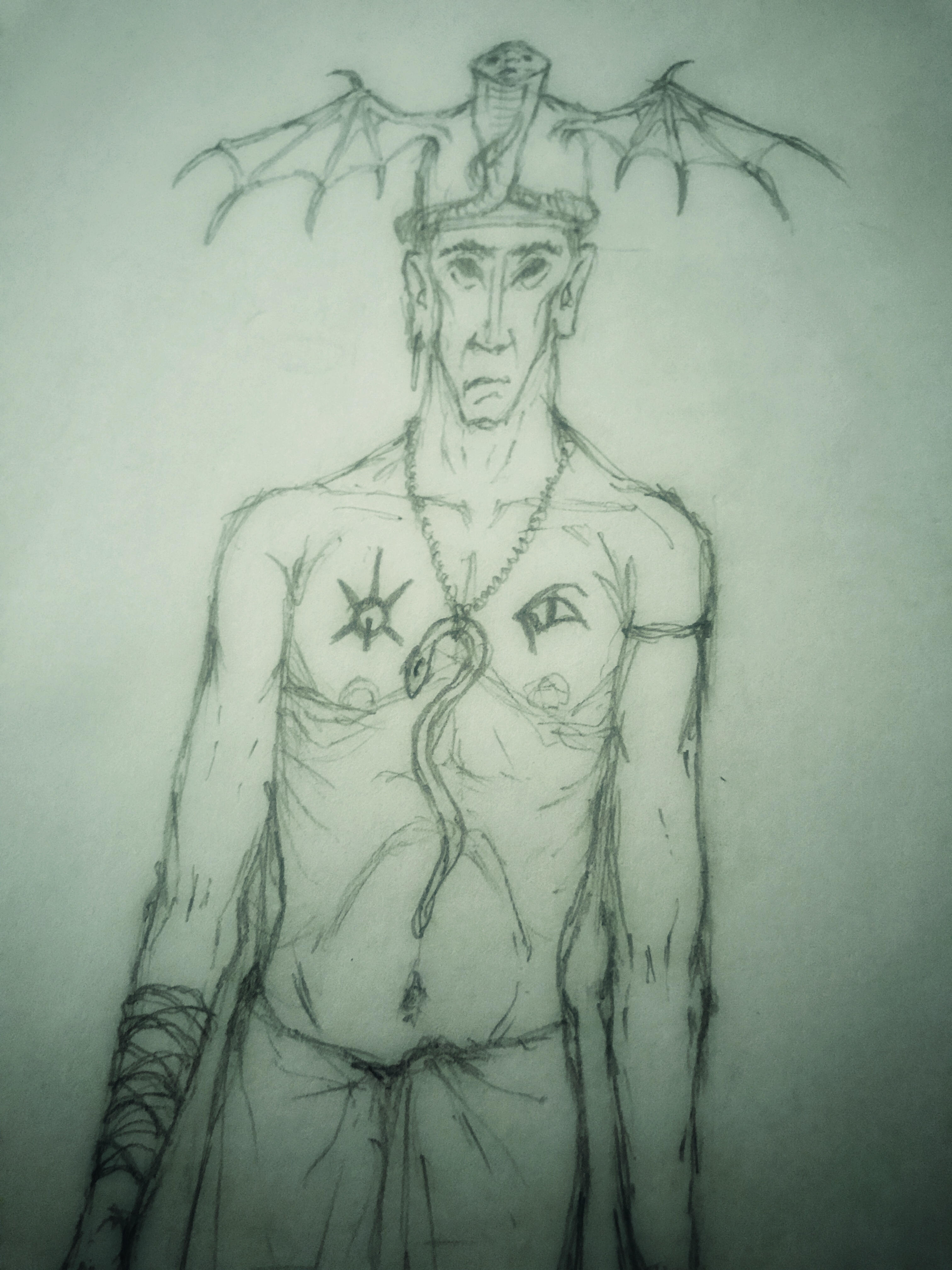
Pencil doodling
If it’s in this category, I had nowhere else to put it!
Pencil doodling
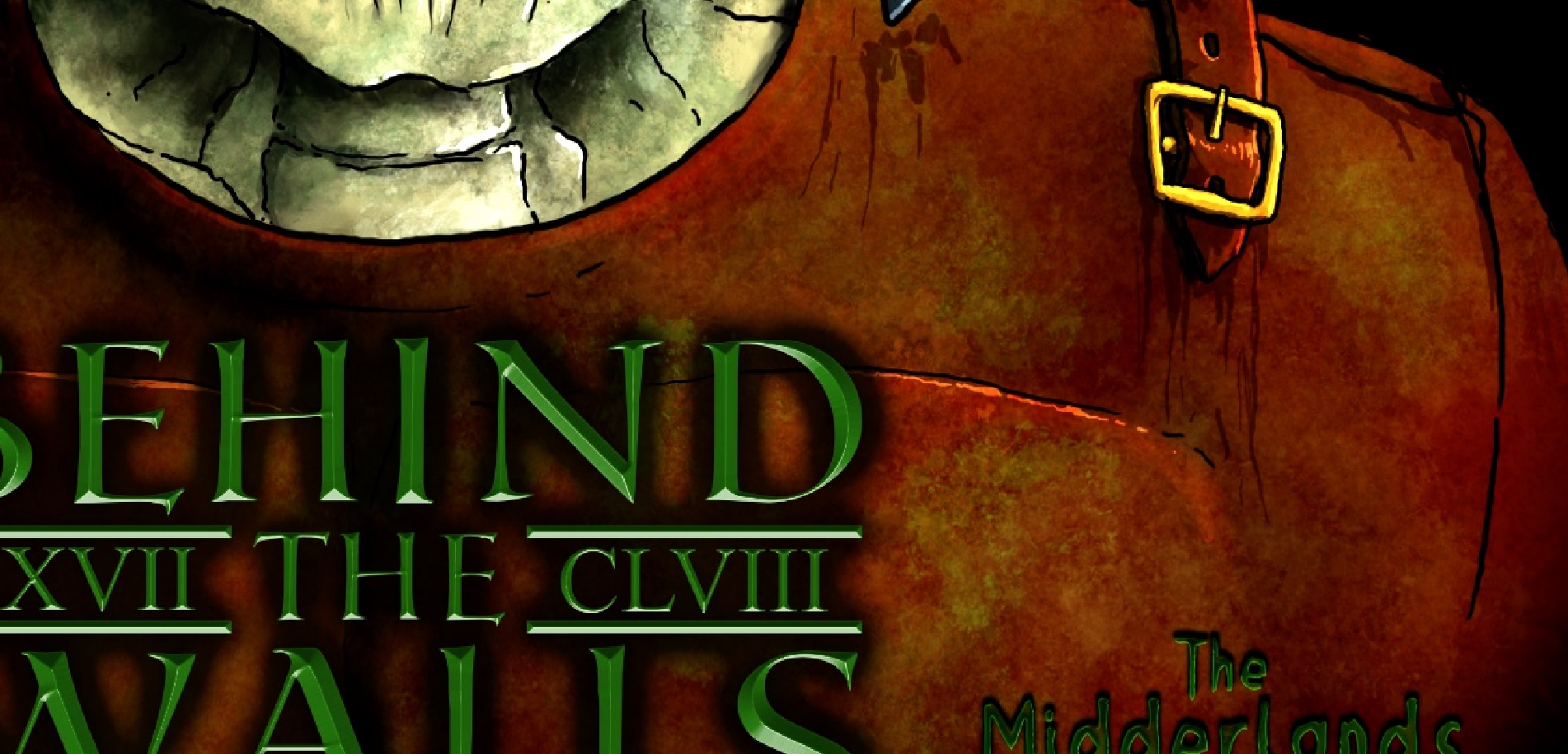
So, I spent tonight working on finishing up the art piece for the Behind The Walls cover.
I am pretty pleased with it… 🙂
And because I’m a tease…


Off the coast, in shallow waters, a basalt slab rises from the choppy sea. Known as Watchman’s Stone, it was once used by the Seawatch Order. Now it lies long-derelict… or does it?

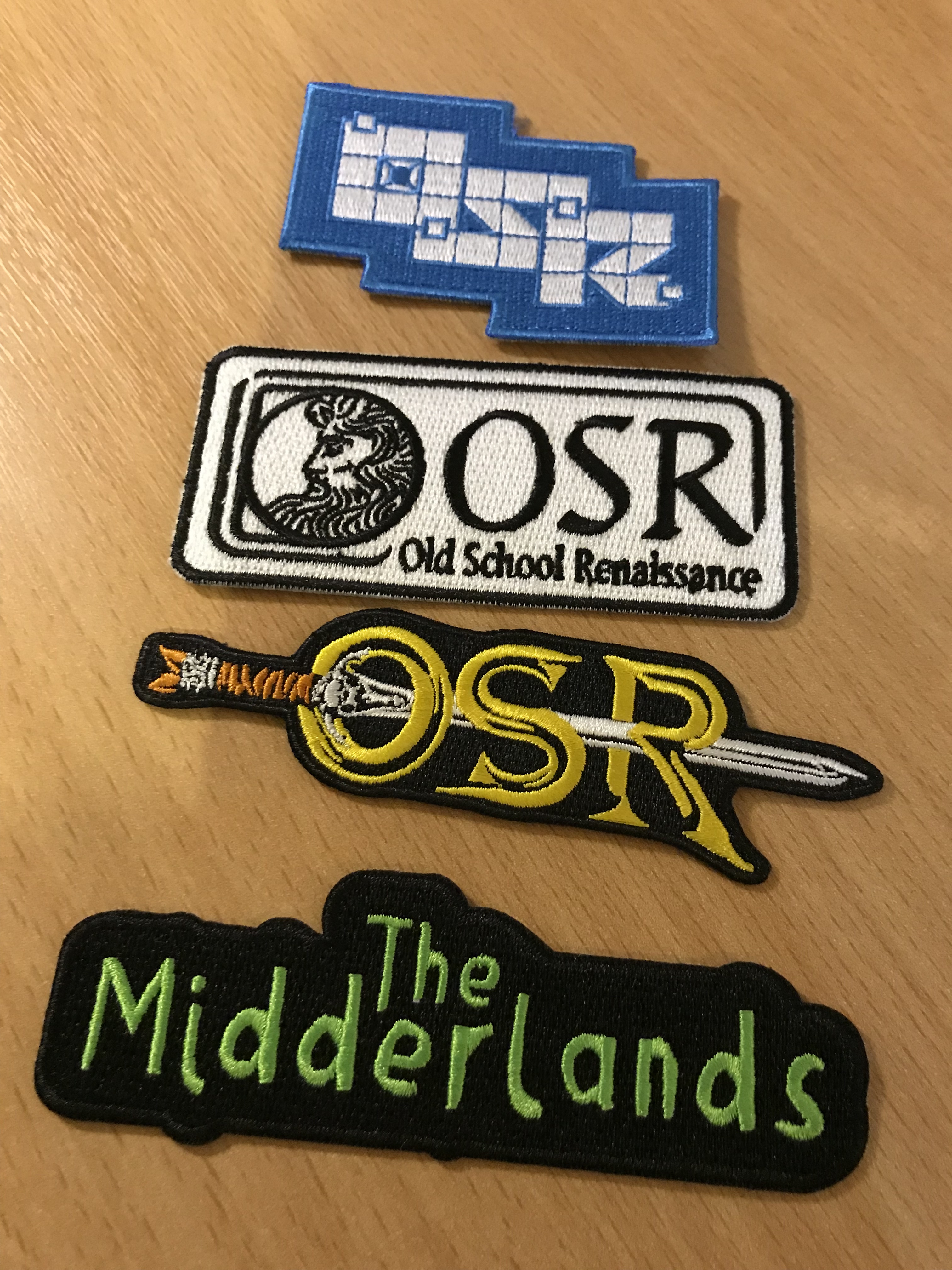
Thaddeus Moore is doing wonderful, iron-on patches.
He did some The Midderlands ones for me, and those will be up on my website at the start of the year. In the meantime…
You can get hold of these following the instructions here:
To quote Thad: “Buy an OSR patch because I made a lot of them!
PayPal $6 per patch to: thaddeus.g.moore@gmail.com with a note specifying your design choices and ensure your shipping address is current. Shipping included.”
So, if you want 1x Blue Map and 1x The Midderlands, you should send $12.
They are (top to bottom):

MonkeyBlood Design & Publishing was represented down at DragonMeet by Peter Regan at Squarehex, who I would like to thank for his work during (and either side) of the day. Peter did a great job and sales were glorious.
Thank you to everyone who purchased products. Your support of myself and Squarehex is invaluable.
Hat tip to Ralf Schemmann for the ‘on the day’ photo:
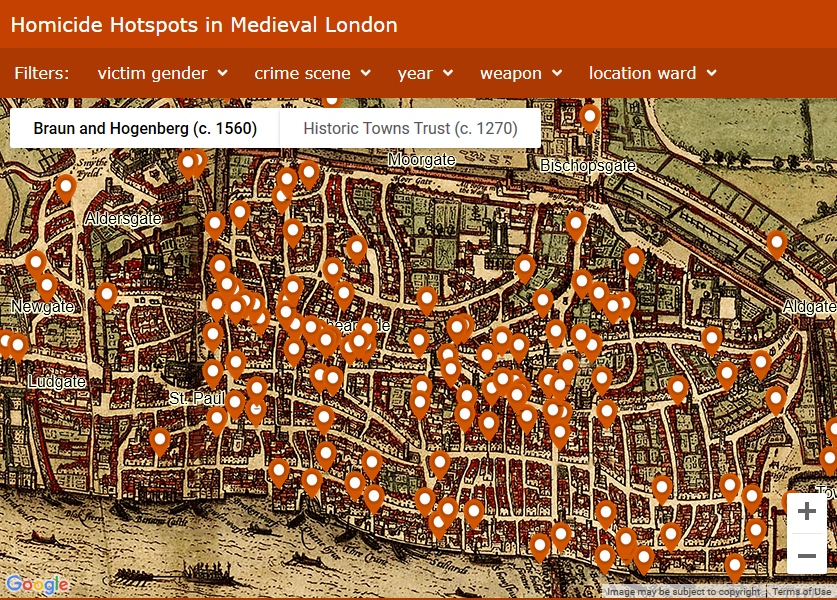
Thanks to a tip off by Mark Nolan… Check this out!! This is most definitely gameable and relevant to my next Kickstarter project…
https://www.vrc.crim.cam.ac.uk/vrcresearch/london-medieval-murder-map

It has been a long time coming. The old site served me well during my time as a minnow. Now, I need a bigger pond to swim in.
The old site was littered with PayPal buttons, nooks and crannies. To find anything was a chore. But no more.
A better layout, a better shop, a better gallery. All-in-all, just better for me and you. So take a look around. Kick the tyres. Make a coffee. Put your comfy slippers on. Let off some fireworks. Buy a book.
It’s all good from here on in.


When I was 13, I played the TSR UK modules, The Sentinel and The Gauntlet. The maps were wondrous and I loved the style of the cartography.
There were many other maps in the TSR UK series that had this cartographic style, such as O2 Blade of Vengeance, I8 Ravager of Time, CM6 Where Chaos Reigns, X8 Drums on Fire Mountain, UK2 The Sentinel, UK3 The Gauntlet, UK4 When A Star Falls, UK5 Eye of The Serpent, UK6 All That Glitters…, UK7 Dark Clouds Gather, B10 Night’s Dark Terror, etc to name a few.
I loved the buildings and maps in the back of the old Warhammer Fantasy Roleplaying 1st Edition hardback too. Imagine magazine’s Pelinore setting was riddled with beautiful buildings and maps that constructed the fantasy world that my young mind traversed.
Years later, this style and the love of these pieces of art, led me down this pathway of gaming artwork, cartography and publishing. The same pathway that allowed me to win a Gold Award for Best Cartography at the 2018 ENnie Awards. For years, the inspiration to draw maps that harked back to that halycon age, was the man that created the beautiful maps and buildings in those products. That man, was the freelance artist Geoff Wingate, also known by his pen name Paul Ruiz. Some even believe him to be the mysterious Khart O’Graffica Fecit or simply, Kh.
In my opinion, Geoff is the best cartographer to ever appear in print in roleplaying games.


Photos (L to R): Geoff during the TSR UK days; Geoff more recently enjoying a beer.
I have been fortunate to thank Geoff for his impact on my creation of fantasy worlds, and I had so many questions to ask him. Even more fortunate for me, is that he agreed to let me ask them, and post them here for you to see. Geoff, thank you so much!

A lot of people are still inspired and enthusiastic about your work, and with the resurgence of the Old School Roleplaying movement now becoming mainstream, I am sure that you are still inundated with requests to do some cartography work for people. So, some related questions to get them out of the way…
I guess I freelanced for the TSR (UK) Ltd D&D office in Cambridge from about 1982-85. I think that office closed not long after that and so the work dried up… and then I got a full-time job as a designer in a local museum
No, lost contact… although I did find Phil on Facebook a few years ago and we caught up on our news and lives. These 3 guys were all amazing… very intelligent, imaginative and creative… I liked them. I imagine if they lived in a parallel universe… then Jim would be contemplating the starry cosmos in his yurt in Bhutan… Phil would be treading the boards at The Old Vic as Hamlet or Aegon Targaryen… and Graeme would be divulging the secrets of alchemy in the libraries of Alexandria…
I doubt it… I feel my D&D cartography is now archived in the ancient 1980s… so I was surprised when you told me that old school D&D modules are having a revival !!!
I studied architecture at Liverpool University… I was always a precise draughtsman and when I was at school I wanted to be an artist… I always loved Greek & Roman mythology and I was crazy about vintage horror movies… especially Frankenstein and the Werewolf.
…advert in The Cambridge Evening News ? Fate.
I would be given different bits of graph paper with ball point or pencil diagrammatic sketches from Jim, Paul or Graeme… and they would talk me thru the basics and the feeling of the adventure… they always had good ideas… then I would then turn them into attractive and accurate illustrated maps and plans as best I could… by composing the layouts and drawing the cartography and surrounding illustrations and lettering etc. I worked alone and then I would return to their office with the finished artwork ready to send to the printers. Lucky for me, they always liked what I produced…so yes. I was responsible for the whole page presentation.
I used the name Paul Ruiz in the beginning for fun but as more projects were offered to me and it became a more regular and serious thing… then I wanted to use my real name… (who is Khart O’Graffica Fecit??? …that’s not me ???!!!)
…getting to know Jim, Phil and Graeme… and them appreciating my work. Cheers guys
I’ve never been into RPGs… but Jim Bambra once came round with some friends so I would understand how a D&D adventure is played… I wasn’t very good because I felt sorry for the Orcs… hahaa omg
Brian Williams painted some front cover illustrations for the TSR(UK) Ltd D&D modules like… Drums on Fire Mountain, Where Chaos Reigns and All That Glitters… I met him once and I saw one of his original artworks… it was great… 2 days ago I googled his name only to discover that he died 8 years ago… so sad, he was younger than me. I was shocked.


Artwork covers by Brian Williams.
I haven’t really followed many fantasy artists but I always liked some famous painters like Bruegel, Gauguin, Egon Schiele, Frida Khalo, David Hockney… some of my fave movies are Santa Sangre (Jodorosky), La Belle et La Bete (Cocteau), Bladerunner (Ridley Scott) Metropolis (Fritz Lang)…
…probably a sketch to show a visiting friend how to find a bar so we can meet for a beer
…strangely, I am most of proud of ‘Bugs in the System’ Star Frontiers by Graeme Morris… it was one of the most complex with a lot of technical detail and cross-referencing of plans… I also am proud of Adv D&D ‘Eye of the Serpent’ where I managed to draw a 3D landscape view of the mountains and yet incorporate the 2D measured map of the valley…


UK5 Eye of the Serpent


SFAD5 Bugs in the System
…not really.
…I don’t have any regrets in life. I am a fatalist. But a couple of my early efforts were a bit clumsy and basic… (‘…could do better’ like School Report)
…yes, times have changed…no PCs or computer software in the 80s… all done by hand…. first, metric graph paper taped to drawing board… then tape on tracing paper sheet on which a pencil draft is drawn …then tape on a sheet of translucent vellum paper on which black pen lines were drawn to be printed in black for the main features… then tape on another sheet of translucent vellum paper on top on which black pen lines were drawn to be printed in grey like for the grid… it was a series of overlays… you had to use expensive vellum sheet because it was stable and overlays had to match exactly without any paper distortion from humidity or temperature… sometimes I had to prepare a block coloured background of coloured paper cut-outs stuck on a coloured board… that was tricky matching it up with the overlays…
I usually drew the illustrated cartography to a larger scale and it was reduced when printed…
…I only used Rotring pens
…I never used a stippling brush… it’s all individually drawn dots… good mindless concentration for meditation !!!… for some patterns I used Letraset as a last resort but very fiddly… I never used Letraset letters but I did often trace by hand the Letraset typefaces and sometimes customize them…
…not much… for 14 years I was a lecturer in the Design Dept at a local Technical College
teaching mainly Interior Design and 20C Cultural Studies… now a partner and I have set up an eco-biz… buying, selling, upcycling and salvaging design furniture and stuff… who knows what tomorrow brings in this crazy modern world… man the life boats !!! (I love the folk song, ‘Who knows where the time goes’ sung by Kate Rusby…)
Byeeee
Glynn would like to thank Geoff for his kindness and listening to me being a ‘total fan boy’. It was a great pleasure.


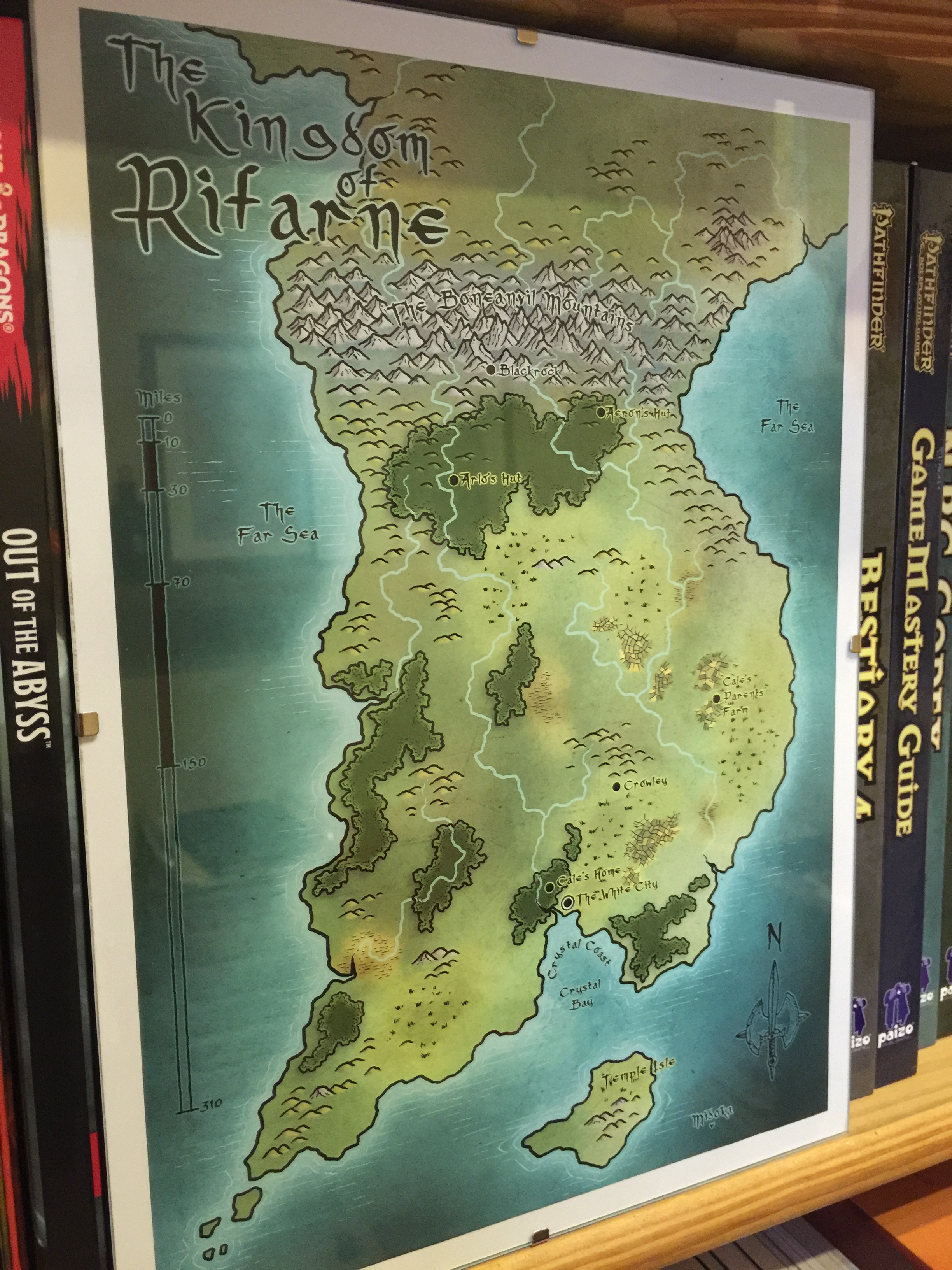
Fantasy author, Sarina Langer writes about her experiences using maps in her novels.
You can check out her website here: https://sarinalangerwriter.com/.


Everyone knows that we all judge books by their covers–but what about their maps?
A map in a fantasy novel is pretty much an instant sell for me–and bookworms and reviewers (aka your audience) love them, too.
A map in your novel tells your readers one thing above all others: you know what you’re doing. It instills trust in you as the author.
Moreover, a map is a massive step toward making your fictional world believable.
In other genres, a map is no issue–if you say your character travels from London to Oxford, your readers either know the distance because they’re local, or they can easily google it if they wanted to.
But a fantasy world you created? Your readers will only know where places are in relation to each other if you give them a map. You can tell them in the story, of course, but you know what we writers say about showing vs. telling.
I love leafing back to the map when new destinations are introduced (it’s one of the reasons I prefer paperbacks–it’s easier). It’s another way to interact with the book, which ultimately means your readers will get more out of it.
Naturally, there are exceptions. V. E. Schwab’s Shades of Magic series is an urban fantasy trilogy set in parallel Londons, but because there are differences between the different Londons she’s got maps to highlight those differences.
So, depending on your book’s plot, a map might be a great addition even if you haven’t created a new world from scratch!
Let’s be honest, indie authors don’t have a great reputation. A lot of people think we don’t take publishing seriously.
While a map is just a small step toward showing you’re serious and doing everything you can, it also shows you’ve really thought about your world.
It’s not just a quick thing you’ve thrown together because your book needed to take place somewhere, but it’s a world you’ve spent a considerable amount of time on.
Having a map will reflect well in your reviews, too. If you don’t include a map, reviewers might not bring it up but it won’t affect the rating positively, either; however, if you do include a map, there’s a good chance your readers will comment on how much they liked it.
On a more personal note, a map looks good. The first time I saw one of my maps, it was a bit like–well, not like holding my baby for the first time, that would be the finished book, but maybe a bit like seeing the scan for the first time. Suddenly, your world is real.

And have you never opened a fantasy novel, seen the map, and lovingly gazed upon its beauty? Have you never been convinced to buy a book because of the map?
It could be the final argument in favour of your own book.
Self-publishing can get pricey fast, but your map won’t set you back much. It’s the cheapest addition to your book you can make. Also, if more than one book use the same map, you can re-use it instead of having to spend out again!
And if it convinces a potential reader that you do know what you’re doing and to give your book a shot, there’s really no reason not to.
Many thanks to Sarina, for taking the time to share her thoughts.
Check out her website here: https://sarinalangerwriter.com/.
 A5 Character Sheet Pad: The Midderlands (Swords & Wizardry)
£5.00
A5 Character Sheet Pad: The Midderlands (Swords & Wizardry)
£5.00
 A5 Graph Paper Pad: 5mm Squares
£5.00
A5 Graph Paper Pad: 5mm Squares
£5.00
 Murder Knights of Corvendark
Price range: £10.00 through £20.00
Murder Knights of Corvendark
Price range: £10.00 through £20.00
 Map Monkey Digital Bundle
Original price was: £25.00.£22.00Current price is: £22.00.
Map Monkey Digital Bundle
Original price was: £25.00.£22.00Current price is: £22.00.
 Rancid Canyons of the Floating Death Sheep
Price range: £10.00 through £20.00
Rancid Canyons of the Floating Death Sheep
Price range: £10.00 through £20.00
 The City of Great Lunden
£38.00
The City of Great Lunden
£38.00